
Nigeria to launch unified data exchange platform by end of 2025

Joy Agwunobi

The federal government has announced plans to streamline identity management in Nigeria through the rollout of the Nigeria Data Exchange Platform (NGDX), a centralised system designed to eliminate the burden of repeated data submissions by citizens across multiple agencies.

For years, Nigerians have faced the frustration of presenting the same personal details and biometrics for services such as National Identification Number (NIN) registration, driver’s licences, Bank Verification Numbers (BVN), SIM card registration, and international passports. The NGDX aims to put an end to this duplication by enabling secure, seamless sharing of verified data among government institutions.

Speaking at a stakeholders’ workshop in Abuja, Kashifu Inuwa, director general of the National Information Technology Development Agency (NITDA), said the platform will serve as a unified backbone for identity and data verification.

“With the NGDX, citizens will no longer need to repeatedly submit the same personal data each time they interact with a government agency. Authorised institutions will be able to seamlessly verify and share records on the back end,” he explained.

The reform is expected to cut costs, save time for citizens, and address inefficiencies across the public sector. It will also benefit businesses—particularly fintechs and service providers—by enabling faster Know Your Customer (KYC) checks and giving them access to government-backed verification systems.
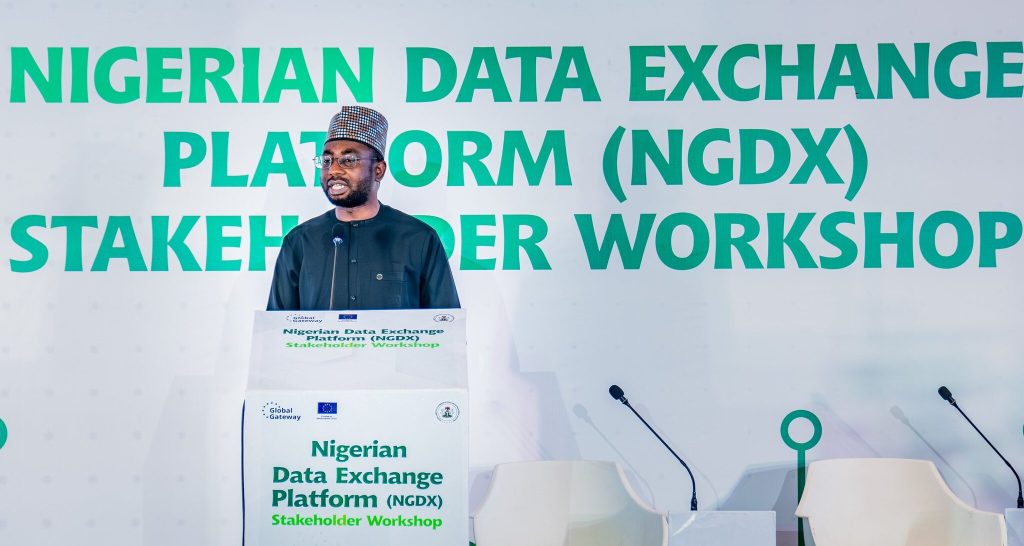
Inuwa further noted that the NGDX’s value goes beyond convenience. By allowing the use of anonymised public data, it will open new opportunities for innovation in sectors such as healthcare, agriculture, fintech, and education technology.

“The NGDX will open opportunities for startups and enterprises to build solutions leveraging anonymised public data for improved healthcare delivery, agricultural productivity, fintech development, and education technology,” he said.

He described the initiative as “essential digital infrastructure,” placing it on the same scale of importance as Nigeria’s nationwide fibre optic rollout, and emphasised its centrality to the country’s digital economy aspirations.

To ensure successful deployment, NITDA is working in collaboration with the ministry of communications, innovation and digital economy and other key stakeholders.

Backing the initiative, Bosun Tijani, minister of communications, innovation and digital economy, described the NGDX as a critical system for unlocking innovation, deepening collaboration, and extending the reach of Nigeria’s digital economy.

“NGDX will enable secure, seamless data sharing across government and business, unlock innovation, collaboration, and inclusive economic growth, and deliver smarter, faster services to citizens under a framework of privacy, security, and accountability,” he stated, adding that the NGDX is scheduled to go live by the end of 2025.

Leave a Comment

Nigeria to launch unified data exchange platform by end of 2025

Joy Agwunobi

The federal government has announced plans to streamline identity management in Nigeria through the rollout of the Nigeria Data Exchange Platform (NGDX), a centralised system designed to eliminate the burden of repeated data submissions by citizens across multiple agencies.

For years, Nigerians have faced the frustration of presenting the same personal details and biometrics for services such as National Identification Number (NIN) registration, driver’s licences, Bank Verification Numbers (BVN), SIM card registration, and international passports. The NGDX aims to put an end to this duplication by enabling secure, seamless sharing of verified data among government institutions.

Speaking at a stakeholders’ workshop in Abuja, Kashifu Inuwa, director general of the National Information Technology Development Agency (NITDA), said the platform will serve as a unified backbone for identity and data verification.

“With the NGDX, citizens will no longer need to repeatedly submit the same personal data each time they interact with a government agency. Authorised institutions will be able to seamlessly verify and share records on the back end,” he explained.

The reform is expected to cut costs, save time for citizens, and address inefficiencies across the public sector. It will also benefit businesses—particularly fintechs and service providers—by enabling faster Know Your Customer (KYC) checks and giving them access to government-backed verification systems.

Inuwa further noted that the NGDX’s value goes beyond convenience. By allowing the use of anonymised public data, it will open new opportunities for innovation in sectors such as healthcare, agriculture, fintech, and education technology.

“The NGDX will open opportunities for startups and enterprises to build solutions leveraging anonymised public data for improved healthcare delivery, agricultural productivity, fintech development, and education technology,” he said.

He described the initiative as “essential digital infrastructure,” placing it on the same scale of importance as Nigeria’s nationwide fibre optic rollout, and emphasised its centrality to the country’s digital economy aspirations.

To ensure successful deployment, NITDA is working in collaboration with the ministry of communications, innovation and digital economy and other key stakeholders.

Backing the initiative, Bosun Tijani, minister of communications, innovation and digital economy, described the NGDX as a critical system for unlocking innovation, deepening collaboration, and extending the reach of Nigeria’s digital economy.

“NGDX will enable secure, seamless data sharing across government and business, unlock innovation, collaboration, and inclusive economic growth, and deliver smarter, faster services to citizens under a framework of privacy, security, and accountability,” he stated, adding that the NGDX is scheduled to go live by the end of 2025.

[quads id=1]

Get Copy

Leave a Comment
