
Nigeria’s emergence as a major refining centre was expected to change the country’s place in Africa’s petroleum economy. After decades of dependence on imported finished products despite being a major crude-oil producer, the country is beginning to supply more of its own petrol and diesel while reaching markets beyond its borders.
But the global fuel crisis is exposing a complication in that transformation. A country can expand its refining capacity, reduce its dependence on imported petrol and become a regional supplier without eliminating its exposure to international prices or guaranteeing that every part of its domestic market will remain adequately supplied.
The contradiction lies in the economics of scarcity. When fuel is difficult to obtain, its value rises in markets where buyers are prepared to pay more. Where neighbouring countries offer substantially different prices, suppliers have an incentive to direct products towards the more lucrative destination.
For Nigeria, that creates a difficult balance between the commercial opportunities of becoming a regional refining hub and the domestic objective of maintaining reliable fuel supplies for households and businesses.
David Precious, senior market analyst at EBC Financial Group, said petrol sells for approximately 25 percent more in Togo than in Nigeria and more than 50 percent more in Ghana, according to the price comparisons cited in the firm’s analysis.
Such disparities create a potential pull on available supplies. They do not, by themselves, establish how much fuel leaves Nigeria through formal exports or illicit diversion, nor do they prove that cross-border movements are causing a domestic shortage. But they highlight a market incentive that becomes more consequential when international supplies of finished petroleum products are constrained.
The deeper question is whether Nigeria’s expanding refining industry can convert its industrial advantage into lasting energy security while operating in a regional market where fuel follows both demand and price.
Crude is returning. Fuel is taking longer.
The origins of the present pressure lie in the uneven recovery of international petroleum supplies.
The Strait of Hormuz crisis disrupted a major route for global energy shipments, restricting flows of crude oil and refined petroleum products. Although exports have subsequently recovered, the improvement has not been uniform across the two markets.
Reuters reported on 6 October, citing data from shipping-data provider Vortexa, that Gulf crude and condensate exports excluding Iran had recovered to approximately 91 percent of their pre-war levels in September. Exports of refined fuels, including liquefied petroleum gas, remained at around 60 percent of their pre-war levels.
The distinction is crucial because crude oil is not the fuel that motorists put into their vehicles or that businesses burn in their generators. It must be processed into finished products before it can meet that demand.
A recovery in crude shipments therefore does not immediately replenish petrol and diesel inventories. Refinery operations, product yields, storage capacity, shipping arrangements and distribution networks all influence how quickly additional crude becomes available fuel.
The International Energy Agency has highlighted the scale of the disruption to global refinery activity. In its September Oil Market Report, the agency said refined-product and liquefied petroleum gas exports from the Gulf remained nearly 60 percent below their February levels.
For countries that rely heavily on imported finished products, the consequences can persist even after crude exports begin to recover. Importers must compete for available cargoes in a market where refinery operations and product inventories remain under pressure.
Africa is particularly exposed. Afreximbank estimated in 2025 that the continent spends approximately $30 billion annually on refined-petroleum imports.
This dependence means that a disruption in one international supply corridor can affect transport costs, manufacturing expenses and household spending thousands of kilometres away. The shock travels through import bills, shipping costs, storage facilities, distribution networks and ultimately the prices consumers pay.
Nigeria’s growing refining industry offers a potential buffer against this vulnerability. Yet it does not remove the country’s exposure to international crude prices, the cost of supplementary feedstock or the commercial conditions governing the sale of finished products.
When a cheaper market becomes a source of supply
The price differences identified by EBC Financial Group illustrate how scarcity can change the movement of petroleum products across national borders.
In an integrated market, price differences can encourage suppliers to move products towards areas where demand is stronger or buyers are willing to pay more. Such trade can improve the distribution of available supplies and create export opportunities for producers.
During a shortage, however, the same mechanism can intensify competition between neighbouring markets.
If a litre of petrol commands a substantially higher price in Togo or Ghana than in Nigeria, suppliers have a commercial incentive to consider those destinations, provided the difference covers transport, financing, regulatory and other transaction costs.
That incentive does not necessarily translate into an equivalent volume of fuel leaving Nigeria. Actual trade depends on contractual commitments, available inventories, export arrangements, distribution costs and other market conditions. Nevertheless, the price gap creates a reason to examine whether the domestic market is receiving the volumes it requires.
Aliko Dangote, president of the Dangote Group, warned in September that petrol prices in some neighbouring countries were 30 to 50 percent higher than in Nigeria. He also said fuel intended for the Nigerian market was being diverted across borders.
His comments highlight the distinction between two forms of cross-border movement. Formal exports are legitimate commercial transactions, while smuggling involves evading applicable laws and controls. They should not be treated as interchangeable.
Nor should every exported litre be regarded as fuel denied to Nigerian consumers. Products may be exported because they exceed immediate domestic requirements, satisfy existing contracts or support the commercial viability of a refinery operating in a regional market.
The central issue is whether exports, domestic production, imports and inventories are collectively consistent with domestic demand.
That requires reliable information about refinery output, local deliveries, export volumes, consumption and stocks. Without such information, the debate risks becoming a contest between competing claims rather than an evidence-based assessment of fuel security.
For Nigeria, the policy challenge is to preserve the advantages of regional trade while ensuring that the domestic supply chain remains sufficiently resilient to withstand international disruptions.
The Dangote refinery changes the equation, but not every variable
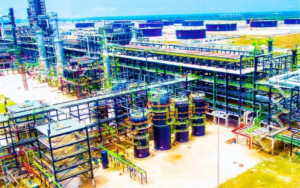
Nigeria’s refining expansion represents a structural change in the country’s petroleum economy.
The NMDPRA’s August 2026 statistics showed that crude receipts by domestic refineries increased to 683,000 barrels per day from 585,000 barrels per day in July, a rise of approximately 17 percent. The Dangote refinery recorded average capacity utilisation of 105.21 percent during August.
The regulator’s figures also showed that average daily petrol receipts across the Nigerian market rose to 50.5 million litres in August from 45.5 million litres in July, while domestically sourced petrol receipts increased.
These figures demonstrate the growing contribution of local refining to Nigeria’s petrol supply. They also underline why the question of energy security cannot be answered by looking at exports or refinery utilisation in isolation.
Capacity utilisation measures how intensively a refinery operates relative to its stated capacity. It does not, on its own, reveal how much fuel is ultimately available to domestic consumers, whether inventories are adequate or whether distribution networks can meet demand consistently.
The amount of crude available is another important variable.
The Dangote refinery has said it requires between 13 and 15 crude cargoes monthly. Its allocations from the Nigerian National Petroleum Company have varied, requiring it to supplement available volumes with crude purchased at international prices.
The cost and reliability of feedstock can influence the economics of refining, even when a facility has sufficient installed capacity. A refinery must obtain crude, process it into the required product mix and deliver those products to buyers at commercially sustainable prices.
The same refinery can also serve several markets simultaneously. Its domestic deliveries, exports, inventories and product mix all affect the amount of fuel available at any particular time.
This is why Nigeria’s refining advantage should be judged through a combination of measures: reliable crude access, sustained refinery operations, domestic deliveries, adequate stocks and the ability of distribution networks to meet demand.
The distinction is especially important because petrol and diesel can experience different supply conditions. A market may have adequate petrol inventories while facing tighter diesel supplies, or the reverse. Energy security is therefore not a single number or a single product.
The expansion of the Dangote refinery is significant, but its contribution to domestic resilience ultimately depends on how effectively production is translated into reliable supply.
Africa’s fuel problem does not stop at the coast
Nigeria’s position is part of a wider African challenge.
The continent’s dependence on imported refined products exposes many economies to international supply disruptions, even where they have access to crude oil. Countries without sufficient domestic refining must compete for finished products, while those that import through ports and transit corridors face additional transport and logistics costs.
Landlocked countries are particularly vulnerable because fuel must pass through coastal import terminals and several stages of inland distribution before reaching consumers.
Ethiopia, which receives most of its fuel through the Djibouti corridor, introduced fuel-conservation measures in March 2026. Zambia declared a fuel-supply emergency in April as diesel scarcity began affecting its market. Although conditions in both countries subsequently eased, their experiences demonstrate how a disruption at an international supply point can travel inland and affect domestic economic activity.
These examples illustrate a different dimension of energy insecurity. For coastal importing countries, the immediate challenge may be obtaining cargoes and managing import costs. For landlocked economies, the problem also includes transit capacity, storage, transport costs and the reliability of supply routes.
The consequences can extend across the economy. Fuel shortages can disrupt commercial transport, increase the cost of moving agricultural produce and manufactured goods, and complicate operations for companies that depend on road logistics.
Nigeria’s growing role as a regional supplier could help reduce some of these vulnerabilities by providing an additional source of refined products within Africa. The Dangote refinery has supplied markets including Côte d’Ivoire, Cameroon, Tanzania, Ghana and Togo.
Its export reach has also extended beyond the continent. Reuters reported in September that the refinery had become a major supplier of aviation fuel to Europe amid disruptions to Middle East exports, illustrating the commercial opportunities available to a large refinery when international markets tighten.
That opportunity matters for Nigeria’s industrial development. Export revenues can strengthen the commercial case for domestic refining, while regional trade can reduce some African markets’ dependence on more distant suppliers.
But it also makes the relationship between domestic and external demand more important. As Nigeria becomes more integrated into regional and international petroleum markets, the country’s supply security will depend increasingly on how effectively its domestic requirements are managed alongside commercial opportunities abroad.
The objective should not be to retreat from regional trade. It should be to ensure that the growth of that trade strengthens rather than undermines the resilience of the domestic market.
Why a stable currency cannot guarantee cheap fuel
The current crisis also demonstrates why exchange rates alone cannot explain movements in petroleum prices.
Currencies remain important because crude oil and refined products are commonly priced internationally in foreign currency. A weaker domestic currency can increase import costs, while a stronger currency can reduce the local-currency cost of purchasing petroleum products.
But currency movements are only one component of the final price.
South Africa’s October fuel-price calculations illustrate the distinction. The Department of Mineral and Petroleum Resources attributed a substantial portion of the relevant price movement to international petroleum-product prices, while the rand’s contribution was comparatively small in the calculation cited by EBC Financial Group.
The broader point is that the cost of obtaining finished fuel can rise even when exchange-rate movements are limited. When international inventories fall and suppliers compete for fewer available cargoes, product prices can increase independently of the currency effect.
For Nigeria, this means domestic refining cannot completely insulate consumers from the global market. The refinery still needs crude, and the economics of obtaining and processing that crude remain connected to international prices.
The same applies to neighbouring markets. Price differences may reflect taxes, distribution costs, pricing policies, transport expenses and supply conditions, rather than scarcity alone.
Consequently, a comparison of pump prices is a useful starting point for understanding commercial incentives, but it is not a complete explanation of the movement of fuel across borders.
A sound assessment must consider the full cost of supplying each market and establish whether price differences are translating into actual changes in trade flows.
The cost of fuel uncertainty to Nigerian businesses
The implications of fuel-market instability extend well beyond the petroleum sector.
Transport operators need predictable fuel availability and prices to plan routes, manage vehicle utilisation and control operating expenses. Manufacturers must account for the cost of transporting raw materials and finished goods, while distributors face the expense of moving products between ports, warehouses and retail outlets.
When fuel prices rise, businesses may absorb part of the increase, accept lower margins, adjust operations or pass additional costs to customers. The outcome depends on their energy requirements, competitive position and ability to change suppliers or operating methods.
Households are affected through transport expenses and the prices of goods and services that depend on fuel-intensive supply chains.
This is why a global petroleum disruption can become a domestic economic issue even in a country that produces crude oil and operates a major refinery.
The question is not merely whether Nigeria produces enough fuel in aggregate. It is whether products are available in the right quantities, at the right locations and at costs that businesses and households can sustain.
Uncertainty itself can carry an economic cost. Companies may find it more difficult to budget for fuel purchases, plan deliveries or commit to production schedules when prices and availability are volatile. Smaller businesses, which often have less financial capacity to absorb unexpected expenses, can be particularly exposed.
Reliable supply therefore has value beyond the immediate price of a litre. It supports planning, investment and confidence across the wider economy.
For Nigeria, the long-term benefit of expanding refining capacity will depend partly on whether it helps reduce that uncertainty.

The policy dilemma: affordability, supply and regional trade
Nigeria’s challenge is not simply to choose between keeping domestic fuel prices low and allowing petroleum products to move freely across borders.
Each objective carries economic consequences.
Higher domestic prices could narrow the gap with neighbouring markets and weaken some incentives to redirect fuel. But they would also impose additional costs on households, transport operators and businesses. Moreover, a higher pump price would not automatically resolve a shortage caused by insufficient production, inadequate inventories or distribution bottlenecks.
Suppressing domestic prices below the costs and returns available in neighbouring markets can create different problems, depending on the pricing framework and how suppliers are compensated. If the gap becomes sufficiently large, commercial incentives to sell elsewhere may strengthen.
The appropriate response therefore depends on the underlying cause of the pressure.
Where crude availability constrains production, improving the reliability of feedstock supply may be more effective than changing pump prices. Where products are available but distribution is inefficient, better logistics and inventory management may offer greater benefits. Where illegal diversion is established, enforcement and monitoring become relevant.
Policymakers also need timely information on how much fuel is produced, how much is delivered locally, how much is exported and how much remains in inventory.
Such transparency would make it easier to distinguish a genuine domestic supply deficit from a price-driven concern or a temporary disruption affecting particular products or locations.
A predictable policy environment matters to refiners as well. Large-scale refining requires substantial capital, continuous access to feedstock, maintenance and commercially sustainable outlets for finished products. Measures intended to protect consumers should therefore be assessed for their implications for investment and supply reliability.
The aim is not to guarantee that every litre remains within Nigeria regardless of market conditions. It is to establish a supply system in which domestic requirements are adequately met and legitimate regional trade can continue without creating avoidable vulnerabilities.
What the next data must establish
The next phase of Nigeria’s fuel-security debate should be driven by evidence rather than assumptions about the relationship between exports and domestic shortages.
The NMDPRA’s monthly statistics will be important in showing whether domestic refinery output, imports, deliveries, consumption and inventories are moving in a sustainable direction. Those figures should be assessed over several months rather than treated as isolated observations.
International reporting from the International Energy Agency will help clarify whether refinery activity and refined-product exports are recovering sufficiently to ease competition for available supplies.
Price movements in Nigeria and neighbouring countries will also matter, although the comparisons must use consistent products, locations and dates. A narrowing price gap could reduce some commercial incentives to redirect supplies, while a recovery in international product availability could ease competition for cargoes.
The decisive Nigerian question is whether local deliveries remain adequate as the country expands its role as a supplier to other markets.
If domestic supply remains dependable, inventories are sufficient and demand is consistently met, the evidence would suggest that Nigeria is managing the competing pressures. If domestic availability deteriorates alongside persistent price disparities, the case for closer scrutiny of feedstock allocation, exports and distribution would become stronger.
Neither outcome should be assumed in advance.
The central task is to establish how the market is functioning and identify the specific factors affecting domestic reliability.
Refining power is not the same as energy security
Nigeria’s refining transformation is an important development in its industrial history. Greater domestic processing capacity can reduce reliance on imported finished products, strengthen regional trade and provide a platform for further investment in the petroleum value chain.
But the present crisis shows why that progress should not be measured by capacity utilisation or export destinations alone.
The recovery of crude exports has not automatically restored refined-product availability. International shortages can persist even as crude flows improve, and regional price differences can create commercial incentives that influence where fuel is sold.
For Nigeria, the opportunity remains substantial. The country can use its expanding refining industry to support domestic supply, participate more actively in African energy trade and reduce some of the vulnerabilities associated with importing finished petroleum products.
Realising that opportunity requires reliable feedstock, sustained refinery operations, transparent supply data, efficient distribution and a policy framework that recognises both the benefits of regional trade and the importance of domestic availability.
The central paradox is not that Nigeria has failed to benefit from refining more fuel. The available figures show that domestic refining has become a larger contributor to petrol supply and that reliance on imports has declined.
The deeper test is whether these gains can be translated into lasting energy security for the domestic economy.
In a market where scarcity changes commercial incentives and international supply chains remain vulnerable, the success of a refining powerhouse will ultimately be measured not only by how much fuel it processes or sells abroad, but by how reliably its own economy is supplied.