DISPARATE AS THEY SEEM, two large countries in Africa were founded on many similar attributes and historical experiences. The unresolved crises before their emergence as independent countries after the end of colonial rule have shaped them in similarly significant ways. Sudan in the east and Nigeria in the west have gone through years of similar social, political, religious and economic quandaries; the seeds foisted on them even before they were declared independent nations and soon after their independence.
Similar to Sudan and Nigeria are features foisted on both countries by the colonialists. What later became Sudan was historically split into two distinct regions, with cultural and religious divides. The North was primarily Arab and Islamic, while the South was predominantly Black African with Christian and indigenous traditional beliefs. Crises that erupted and have been sustained over the years were products of forced marriages under the colonial policies.
During British rule in Sudan, the North and South were administered as two separate territories, limiting integration and allowing distinct cultural identities to form. When Sudan gained independence in 1956, these contrasting regions were forced together as a single nation. The same played out in what became today’s Nigeria. The root of Nigeria’s confusion lies in Lord Frederick Lugard’s 1914 Amalgamation, a purely administrative decision to merge the Northern and Southern Protectorates as one.
The first betrayal of Sudan started in 1958 when Ibrahim Abboud took power. Abboud wasn’t a visionary. He wasn’t a politician. He wasn’t a nation builder but a trained British military officer. He believed in discipline over democracy and that Sudan should be ruled from top down. He came from the North, from a culture that aligned with the northern Sudanese elite societies and that Sudan should be Arab and Muslim. Period. He saw everything outside of that as something to be controlled, not to be respected. So, in 1958, just two years after independence, Sudan was still learning how to build civilian rule. Instead of supporting that, he would overthrow it. So came Sudan’s first military coup. That moment destroyed civilian rule. So the Army learnt that it could take power with the guns. Sudan has suffered from it.
Ever since, when Abboud looked at the south, he didn’t see Sudanese citizens. He saw a threat to his Islamic Arab project. So, he launched a full scale assault on identity. He banned local languages. He forced Arabic in every school. He expelled priests and teachers. He shut down Christian missions. He replaced educators with soldiers. He turned the whole South into a military zone. This wasn’t nation building. This was cultural violence. So when the southerners resisted the forced Arabisation, Abboud’s regime responded with brutality: villages burnt, public hangings, leaders arrested, there were disappearances and mass displacements. The South always remembers Abboud’s era, at the time the army ruled everything. While this was happening in the South, look at the West, Darfur, Nubia mountains and Kordofan.
The North-South divide in Nigeria is a complex geopolitical, socioeconomic, and cultural schism originating from that British amalgamation, unifying the two regions for administrative and economic convenience, which resulted in an unbalanced framework of dependency and divergent development trajectories. This historical event merged distinct regions that continue to experience deep disparities in educational access, economic development and security. The northern obsession seed planted by Sir Ahmadu Bello, foremost northern politician then, has grown into a big oak now. It is on record that Ahmadu Bello was not comfortable with north-south integration. He preferred to fill vacant public service positions in the North with foreigners then until native northerners were trained to replace them. He looked at the whole of Nigeria from the north-centric standpoint and pointedly expressed his suspicion about the Igbo tribe of southeastern Nigeria, a mindset that still prevails today among many core northerners, especially the politicians.
Under the colonial administration, the British governed the regions differently; they protected traditional Islamic emirate structures in the North while encouraging Western education and Christian missionary activity in the South. This was the same method applied in Sudan and Nigeria. In Sudan, systemic marginalisation evolved, leading successive northern-dominated governments to seek to impose Islamic law (Sharia) on the entire country, which the southern population fiercely resisted. During British rule, the North and South were administered as two separate territories, limiting integration and allowing distinct cultural identities to form. Southerners faced political exclusion, economic neglect and unequal development under colonial policies. When Sudan gained independence in 1956, these contrasting regions were forced together as a single nation.
Both Nigeria and Sudan faced periods of civil wars, although that of Sudan was more protracted and recurring. The decades of civil war arising from the tension that erupted have led to three major civil wars — the First Sudanese Civil War (1955–1972) and the Second Sudanese Civil War (1983–2005) and now the on-going Third Civil War that began on April 15, 2023. These conflicts have resulted in the deaths of an estimated three million people. The Nigerian civil war of 1967 to 1970 resulted in the death of an estimated three million people.
The rising influence of Sudanese Arabs is characterised by a complex shift in power toward previously marginalised nomadic and paramilitary groups. This surge in political, military and economic influence has fundamentally transformed Sudan’s internal structure and redefined its regional alignments across the Horn of Africa and the Middle East. Sudanese Arabs are the largest ethnic group in Sudan, making up about 70 percent of the country’s population. They consist of indigenous African populations (like Nubian, Nilo-Saharan and Cushitic groups) who intermarried with migrating Arab tribes and adopted Arabic as their mother tongue.
There were powerful regions with kingdoms, history and culture. But Abboud looked at them like a backyard, a place for soldiers, a place for taxes, a place that didn’t deserve investment or representation. Abboud didn’t create the Janjaweed, but he created the logic that made them possible. The logic that says use force, not dialogue. Suppress identity. If civilians resist, punish them. If a region is poor, leave it; it is not important. And if there is conflict, militarise it. This logic became the DNA of Sudan’s future: Nimieri’s militia and al-Bashir’s Janjaweed. So, by 1964, the country was collapsing. And under war and economic failure. So students rose up, workers rose up. Women marched. The streets exploded into October revolution, the first Sudanese successful uprising against a dictator. Abboud was forced out but the system he created never left.
When we talk about Sudan’s wars, rebellions and Joseph Lago, Nubian mountains, Darfur, we must understand that Sudan didn’t become a military dictatorship under al-Bashir but under Abboud. He is the beginning of the cycle, the blueprint, the architect of the identity violence, marginalisation and the militarisation that Sudan is still bleeding from today. He didn’t rule Sudan. He betrayed the idea of Sudan.
In Nigeria, Fulani prominence in politics stems from the foundational 1804 Islamic Jihad of Usman dan Fodio, which established the vast Sokoto Caliphate. This centralised political structure allowed Fulani leaders to integrate seamlessly into the British colonial system through the Indirect Rule framework, solidifying an entrenched Northern political dominance that outlasted colonial rule under a forced amalgamation without integration. Their enduring political influence derived from colonial legacy as British administrators governed the expansive Northern region through established Emirates and Native Authorities, turning the Caliphate’s influence into the blueprint for the modern federal system.
Population dynamics have played prominent roles in the governance of Nigeria since independence. The Northern protectorate — heavily influenced by the combined Hausa-Fulani identity — comprises the largest block of voting demographics in the country. The Fulani demonstrated high political astuteness and adaptability, through their strategic alliances, forming coalitions across ethno-religious lines to secure the presidency for leaders like Shehu Shagari, Umaru Musa Yar’Adua, and Muhammadu Buhari.
Aside from the presidency, Fulani elites have enjoyed strong institutional representation, heavily occupied key positions in the judiciary, the military and crucial Federal Ministries, maintaining centralised state control. General Murtala was a Fulani. Over the years, the Fulani identity has been subsumed under a wider Hausa identity, which has proved to be a political survival strategy over the years. One of Fulani’s socio-political organisations like Miyetti Allah have further consolidated their influence by advocating directly for pastoralist rights and ethnic unity. However, in recent times, individuals and groups of Fulani extraction have been implicated in acts of banditry, kidnapping and terrorism, involving forceful eviction and killings of indigenous populations in various parts of Nigeria, notably the north.
Many are blaming the north’s relative underdevelopment on the entrenched power dynamics, mostly orchestrated by northern political actors. Although national politics frequently centre on the “North-South dichotomy,” where political elites negotiate resource control, federal character principles and the rotation of the presidency between the two macro-regions, the north has not been the better for it. The dichotomy has institutionalised a divide in public opinion, with many Southern intellectuals advocating for political restructuring to promote regional autonomy and fiscal federalism, while Northern elites have historically favoured maintaining the centralised federal structure, despite the skewed benefits.
John Garang attempted, though unsuccessfully, to bridge the dichotomy in Sudan during his lifetime. He led a militarised struggle shaped by war. The idea of a new Sudan was a rejection of rule by identity, centre over periphery and religion as a weapon of the state. The South Sudanese were already aware of the political distractions caused by the northern Sudanese elites since Sudan’s independence from Anglo-Egyptian rule. Arabism among them persisted and clouded the judgment of the northern elite, leading to the country’s division. John Garang was one the system tried hard to break but couldn’t. A trained economist educated in Tanzania, Iowa and US Army College, Garang was brilliant, strategic and disciplined.
Garang understood Sudan better than the individuals ruling it. That’s why they feared him. He grew up in the parts of Sudan that the state refused to see: namely the deep South. He watched supremacy and Arabisation shape a country where millions were treated like they didn’t belong. So when Nimieri tore up the peace agreement in 1983, imposed Shari’a law and redrew the borders to steal southern oil, Garang understood they didn’t want unity. They wanted obedience. So, the army sent him to silence Bor mutiny, but he joined it because he realised the rebellion wasn’t against Sudan. It was against the system controlling it. In his vision, Garang didn’t fight for separation. He fought for a new Sudan where Darfur, Nubia, Blue Nile, East and the South share the same dignity as the riverine centre. The rebellion didn’t rise alone. The Cold War wrapped itself around Sudan. Ethiopia trained him because Mengistu was supported by the Soviet Union. The US watched him. Libya tried to manipulate him. Egypt feared him. Israel monitored him. So, Garang wasn’t fighting a local war. He was fighting inside a global battlefield. To crush him, the regime unleashed waves of militias; the Marshals, the popular defence forces, then the Janjaweed, which later became the RSF. Everyone probably agrees that he wasn’t fighting for a tribe, a region. He was fighting to rebuild a country that refused to see its own people. Despite his death, his vision remains the only solution that Sudan has; a new Sudan where no tribe stands above another, no region is forgotten, no child apologises for who they are.
Nigeria’s north-south integration challenge is deeply rooted in historical, educational and economic disparities that continue to fuel political tension. While the resource-rich South drives the national economy, the North suffers from high rates of multi-dimensional poverty and illiteracy, severely hindering national cohesion. Historical trajectories created vast gaps in literacy rates. While many Southern states record adult literacy above 90 percent, several Northern states face rates below 20 percent.
The Igbo quest for self-determination in Nigeria is a deeply rooted movement driven by historical grievances, political marginalisation and cultural identity. It stems from feelings of ethnic exclusion, economic neglect and the unresolved trauma of the 1967–1970 Nigerian Civil War, which witnessed the attempted secession of the Republic of Biafra. The quest for self-determination by the people of Biafra in Nigeria is a deeply rooted movement advocating for the restoration of the defunct Republic of Biafra.
Spurred by historical marginalisation, ethnic tensions and the trauma of the 1967–1970 Nigerian Civil War, the struggle continues to evolve through diplomatic advocacy and domestic tensions. Scholars and civil rights advocates argue that systemic ethnic prejudice, state neglect of critical infrastructure in the South-East and political manoeuvering intentionally isolate the Igbo from national leadership.
What is today’s South Sudan once experienced what Nigeria’s Igbo tribe is now experiencing. Prior to the independence of South Sudan in 2011, Sudanese Arabs made up 40 percent of the population in the former Sudan state. South Sudan separated from Sudan in July 2011 following decades of civil war, which were fuelled by deep ethnic, religious, and cultural divides. The predominantly Christian and animist South felt systematically marginalised by the Arab, Muslim-majority government in Khartoum, eventually leading to an overwhelming democratic vote for independence.
At some point, the fighting in Sudan was halted by the landmark Comprehensive Peace Agreement (CPA) signed in 2005, which granted the South a period of autonomy and outlined the terms for a referendum. In January 2011, the people of South Sudan voted overwhelmingly — with nearly 99 percent in favour — to secede. A new country was born. On July 9, 2011, South Sudan officially became the world’s youngest independent nation.
Between 2014 and 2015, Saudi Arabia and UAE influence in Sudanese politics increased under President Omar al-Bashir. The Rapid Support Forces (RSF) was originally formed by the Sudanese government in 2013 under the former President Omar al-Bashir to fight Sudanese rebels. After defeating those forces, the group grew into such a powerful and integral part of government. It is the rebranded and officially institutionalised successor to the notorious government-backed Janjaweed militias, primarily a coalition of armed Sudanese Arab nomadic tribes, operating mostly in the Sahel region and infamous for their actions in Darfur, which included crimes against humanity.
RSF, the Darfur-based paramilitary group, was initially created from the remnants of the Janjaweed militias and placed under the authority of the National Intelligence and Security Services. The paramilitary group later received official legal status when the Sudanese National Assembly endorsed the Rapid Support Forces Act on January 18, 2017. After becoming an integral component of Sudan’s defences under the command of General Mohamed Hamdan Dagalo, a Sudanese Arab widely known as “Hemedti”, it has grown so powerful as to challenge Sudan’s official military, the Sudanese Armed Forces (SAF) led by Gen. Abdel Fattah al-Burhan. The RSF and the SAF have been engaged in a war for supremacy since April 15, 2023, devastating the country.
The Rapid Support Forces is the latest iteration of a fighting force frequently employed by the government of Sudan since the early 1980s: namely the nomadic men of eastern Chad and the Sudanese region of Darfur. Originally, these Arabs and Arabic-speaking nomads were armed by Libya and Sudan, respectively, to serve as auxiliary troops in Chad, which was then experiencing a civil war. Hamdan Dagalo will either lead a breakaway state or seek to take control of the whole country, according to Sudanese sources.
The current wave of terrorist attacks, earlier described as insurgency, is now threatening the subnational and national governments in Nigeria. The battle for influence and supremacy is taking dangerous dimensions as those terrorists have become intractable and proving hard for a supposedly well-equipped military to contain. With the unfolding agenda that resembles state capture, the Nigerian state is gradually slipping into what could trigger a nation-wide war. It is creating a dangerous situation that could destabilise the country.
Possibilities of breakaways are real as regions may intensify their demand for self-determination and formation of new countries, just as it happened in Sudan. The cost of violent secession could become incalculable in human and material terms depending on how poorly handled such secession demands are. Africa cannot therefore afford to have another Darfur in Nigeria or another RSF-SAF war. Issues associated with regional discontent and violent ethnic militias need to be tackled with equity and justice to keep the huge population of Nigeria safe and – by extension – other countries near and far because of the far-reaching consequences.
- business a.m. commits to publishing a diversity of views, opinions and comments. It, therefore, welcomes your reaction to this and any of our articles via email: comment@businessamlive.com

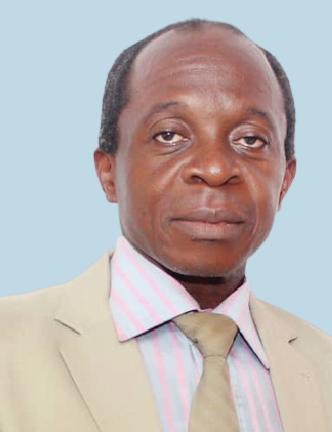
Dr. Olukayode Oyeleye, Business a.m.’s Editorial Advisor, who graduated in veterinary medicine from the University of Ibadan, Nigeria, before establishing himself in science and public policy journalism and communication, also has a postgraduate diploma in public administration, and is a former special adviser to two former Nigerian ministers of agriculture. He specialises in development and policy issues in the areas of food, trade and competition, security, governance, environment and innovation, politics and emerging economies.