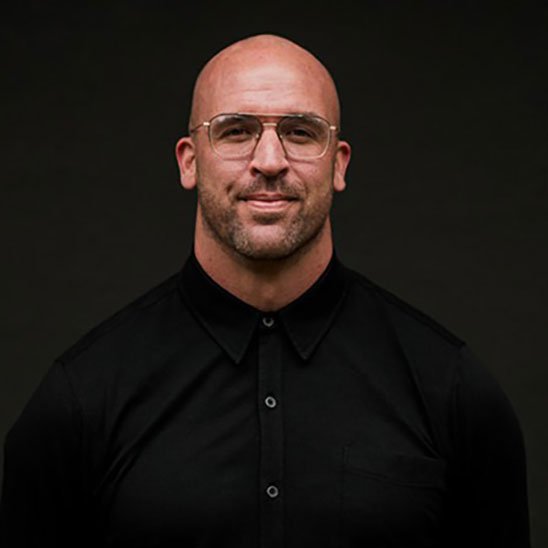
Burnout, defined by analysts as the feeling of depletion, cynicism, and emotional distance that results from a lack of impact or autonomy at work, costs the global economy $322 billion a year, according to a survey by McKinsey Health Institute. Companies have responded to this with wellness stipends, mindfulness applications and other benefits aimed at helping employees cope with pressure. However, Caleb Campbell, a business executive coach and top rated keynote speaker on burnout, mental health and performance, says that approach may be missing the bigger issue.
In an interview with Business A.M.’s Onome Amuge, the former NFL linebacker and West Point graduate, said organisations need to look beyond adding skills and benefits. He argues that burnout and quiet exits can reflect a leadership-capacity problem, as people are often promoted for the qualities that made them successful, only to find that the same identity no longer serves them as their responsibilities grow.
Campbell, who speaks to teams at organisations including Google, LinkedIn, Chase Bank and USAA, also discussed the limits of compensation as a response to identity-related challenges, the organisational costs of treating executive burnout as a personal problem, and how companies can develop leaders who sustain performance without transferring the cost of pressure to those around them. Excerpts:
DDI’s latest Global Leadership Forecast shows leadership confidence has fallen to its lowest level in a decade. In your perspective, what structural changes inside organisations are driving this decline?
I think the biggest structural change is that the demands of leadership have grown much faster than leaders’ inner capacity to carry those demands.
For years, organisations have done a great job helping people build external capability. They’ve invested in technical skills, strategy, communication, and management training. Those things matter. The problem is that today’s leaders are being asked to carry far more uncertainty, complexity, emotional labour, and constant change than ever before. Many have never been shown how to grow the person doing the leading.
I often say that every leader has a carrying capacity. At some point, the pressure they’re carrying exceeds the capacity they’ve built to carry it. That’s when burnout, anxiety, reactivity, and self-doubt begin to show up. Those aren’t simply performance problems. They’re signals that the current version of the leader has reached its limit.
We’re also asking leaders to operate in environments where the pace of change keeps accelerating. AI, hybrid work, economic uncertainty, and rising expectations all require leaders who can stay grounded when they don’t have all the answers. That’s a very different skill than simply managing people well. DDI’s research reflects that reality, showing rising stress, declining trust in managers, and growing gaps in change leadership and strategic thinking.
I don’t think organisations have a leadership development problem as much as they have a human development problem. If we want more confident leaders, we have to help people expand their inner capacity so they can meet today’s demands without being consumed by them. That’s the work that allows leaders to remain present, make better decisions under pressure, and create the kind of environments where other people can do their best work.
How can business leaders distinguish between employees who are simply overworked and those whose internal capacity has reached its limit?
The clearest distinction is how someone responds when the immediate pressure is reduced.
If someone is simply overworked, they usually begin to recover when the workload becomes manageable again. They get a little rest, regain some energy, and start showing up as themselves.
When someone’s internal capacity has reached its limit, reducing the workload often isn’t enough. The anxiety is still there. The reactivity is still there. Decision-making becomes harder. They may feel emotionally exhausted even after taking time off because the issue isn’t simply how much they’re carrying. It’s that they’ve reached the edge of the identity that’s trying to carry it.
In today’s volatile business environment, where companies are expected to deliver more with fewer resources, how can leaders increase organisational performance without accelerating employee burnout?
I think one of the biggest mistakes organisations make is assuming performance is simply a function of effort. So when demands increase, the instinct is to ask people to push harder, move faster, or do more with less.
That strategy works for a while, but every person has a carrying capacity. If the demands placed on someone consistently exceed their capacity to carry them, performance eventually begins to decline. Burnout isn’t usually the result of one difficult week. It’s what happens when the gap between demand and capacity stays open for too long.
The organisations that perform well over the long term pay attention to both sides of that equation. They certainly look for ways to improve systems, remove unnecessary work, and create clarity around priorities. At the same time, they invest in expanding the inner capacity of their people.
That means helping leaders develop greater emotional resilience, self-awareness, adaptability, and the ability to stay present under pressure. Those aren’t soft skills anymore. They’re performance skills because they determine how well someone can make decisions, navigate uncertainty, and lead other people when the stakes are high.
I often tell leaders that pressure isn’t the enemy. Pressure is information. It shows us where our current capacity ends and where our next season of growth begins. Organisations that treat those moments as opportunities for development instead of signs that people simply need to work harder build teams that are able to sustain high performance without sacrificing the health of the people creating it.
From your experience working with organisations such as Google, LinkedIn, Chase Bank and USAA, what common leadership mistakes continue to limit organisational capacity?
One of the biggest traps leaders fall into is asking people to give more instead of asking what would help them have more to give. Those are two very different conversations.
When organisations face pressure, budgets tighten, or expectations increase, it’s easy to ask people to work longer hours, move faster, and carry more responsibility. Sometimes that’s necessary for a season. The problem is that if people are already operating at the edge of their capacity, asking for more eventually produces diminishing returns.
The best leaders I’ve worked with focus on creating the conditions where people naturally have more to give. They create clarity instead of confusion. They build trust instead of fear. They help people feel safe enough to ask for help, speak honestly, and recover when they need to. They invest in the growth of the human being, not just the performance of the employee.
People almost always want to do great work. The leader’s job is to create an environment where they actually have the capacity to do it.
As artificial intelligence, automation and digital transformation reshape the workplace, do you believe the capacity crisis will become even more pronounced? Why?
I actually think the capacity crisis will become one of the defining leadership challenges of the next decade. AI is going to make many parts of our work faster and more efficient. That’s a good thing. The question is what we do with that efficiency.
If history tells us anything, it’s that organisations rarely respond to increased efficiency by asking less of people. They usually respond by expecting more. Higher output. Faster decisions. More change. More complexity. More adaptation.
The danger isn’t AI itself. The danger is that our expectations for human beings continue to grow while our investment in human development stays the same.
The future of work won’t be won by the organisations with the smartest technology alone. It will be won by the organisations that pair extraordinary technology with people who have the inner capacity to adapt, learn, collaborate, and stay grounded in the middle of constant change.
Technology will continue to expand what organisations can do. The limiting factor will increasingly become whether the people inside those organisations have expanded enough to carry what becomes possible.
What early warning signs should boards and executive management watch for before a capacity problem evolves into a costly retention or productivity crisis?
I think most organisations are watching the wrong indicators.
They’re watching engagement scores, absenteeism, retention, and productivity. Those metrics matter, but they tell you what has already happened. The earlier signals are found in the daily experience of your people.
I often say that every leader has a carrying capacity. As leaders reach the edge of that capacity, the first thing that changes isn’t their performance. It’s their presence.
They become more reactive. Their curiosity gives way to certainty. They stop listening as well as they used to. They avoid difficult conversations because they don’t have the emotional bandwidth to have them well. They become more controlling because uncertainty feels harder to hold. Those shifts don’t stay contained within one person. They spread through teams and eventually become culture.
If enough of your leaders are simply trying to make it through the week, your retention problem has already started. Your innovation problem has already started. Your culture is already changing. The numbers just haven’t caught up yet.
By the time burnout shows up in your quarterly reports, the capacity problem has been developing for months. The organisations that stay healthy are the ones that learn to recognise those signals early and respond before the damage becomes expensive.
Investors increasingly evaluate companies based on their human capital strategies. How should organisations rethink leadership development to build long-term competitive advantage rather than short-term performance?
For a long time, leadership development has largely meant helping people become more skilled. We teach communication, strategy, delegation, and decision-making. Those are all important, and they should continue.
The question I find myself asking is who does this person need to become to carry the level of responsibility we’re asking them to hold?
Every promotion asks more of a leader than new technical skills. It asks them to carry greater uncertainty, more complexity, more relationships, and higher stakes. If the person isn’t growing on the inside as fast as the role is growing on the outside, they eventually reach the edge of their capacity.
That’s why I believe leadership development has to become human development.
Organisations that build a long-term advantage won’t simply produce more knowledgeable leaders. They’ll produce leaders with greater self-awareness, emotional maturity, adaptability, and the capacity to stay present under pressure. Those qualities shape every decision a leader makes, every conversation they have, and every culture they create.
I believe the competitive advantage of the future won’t belong to the organisations that develop skills the fastest. It will belong to the organisations that develop people the deepest because those are the leaders who will continue to grow as the demands of leadership continue to grow with them.
Your background spans military leadership, professional sports and corporate consulting. Which leadership lessons translate most effectively across these very different high-performance environments?
The biggest lesson I’ve taken from the military, professional sports, and my work with organisations is that the growth of a team will never outpace the inner growth of the leaders leading that team.
I’ve seen leaders with incredible technical ability struggle because they didn’t have the internal capacity to lead through uncertainty, navigate conflict, receive difficult feedback, or stay grounded when the pressure increased. I’ve also seen leaders create extraordinary teams because they had done that inner work first.
That’s why I don’t think leadership is primarily about influence. I think it’s about embodiment. People don’t simply follow what a leader says. They respond to who that leader is. They borrow their emotional cues from them. They mirror their presence. They absorb the way they respond to pressure. Every culture is shaped by the inner life of its leaders.
That’s the lesson that has translated everywhere I’ve worked. The military, the NFL, and the corporate world all have different missions, but they’re all made up of human beings. The leader’s ability to create healthy, resilient, high-performing teams will always be limited by the depth of their own growth.
Africa’s businesses, including many in Nigeria, operate under persistent economic uncertainty, inflation and talent migration. How can leaders build internal capacity while navigating constant external disruption?
While I can’t speak to the specific economic realities of doing business in Nigeria, I do think the leadership challenge you’re describing is becoming increasingly common around the world.
One of the biggest shifts leaders can make is changing their relationship to disruption.
Most of us instinctively try to survive uncertainty. We fight it, resist it, or wait for it to pass so we can get back to normal. The problem is that when things get back to normal, we stay the same only to repeat the cycle again in the near future.
I’ve come to believe that disruption isn’t only something we have to manage. It’s also something we can work with–and when we do, we grow.
As external conditions change, they surface something internally. Things like fear, self-doubt, anxiety and insecurity. Or there’s the need to micromanage and control or, the temptation to retreat toward what’s familiar. Most of us see those experiences as problems to eliminate. I see them as information.
They reveal the edge of our current capacity.
When leaders learn to pay attention to those signals instead of running from them, the disruption itself becomes the catalyst for greater inner growth. Little by little, they develop the capacity to carry more uncertainty without becoming overwhelmed by it. They become more adaptable, more grounded, and better able to lead other people through the same challenges. Not in spite of the disruption, but because of it.
The external disruption may not change, but the leader does. Over time, that changes the capacity of the entire organisation because every organisation will eventually reflect the capacity of the people leading it.
Your forthcoming book titled ‘Unstriving’, challenges conventional ideas about achievement and success. What central message do you hope business leaders will take from it, and how can it reshape organisational culture?
At its core, ‘Unstriving’ is about identity. From a very young age, all of us adapt to the environments we grow up in. We become who we believe we need to be in order to receive love, safety, belonging, or significance. In other words, we become who we need to be in order to survive our lives.
The challenge is that many of us never let that survival version of ourselves go.
We carry those identities into adulthood, into our relationships, and into our leadership. We keep striving from an identity that was built to help us survive, and then we wonder why success doesn’t bring the freedom we expected.
One of the central ideas in the book is that when we come to the edge of our capacity, we’ve also come to the end of our current identity. Life isn’t simply asking us to do more. It’s inviting us to become someone new.
That’s what “Unstriving” means to me. It’s having the courage to let go of the version of yourself shaped by survival so you can grow into a way of being shaped by greater alignment, authenticity, and wholeness.
I think that has profound implications for organisations because every culture is shaped by the people creating it. When leaders are no longer driven by the need to prove themselves, protect themselves, or perform for their worth, they create environments where other people can also bring more of who they are to the work. That changes the quality of conversations, the quality of decisions, and ultimately the quality of the culture itself.
For me, “Unstriving” isn’t about achieving less. It’s about becoming someone new so your success is no longer built on survival, but on the freedom to fully live and lead from who you really are.
Looking ahead over the next decade, what qualities will define successful business leaders, and how must organisations evolve if they are to remain resilient in an era of continuous change?
I think the leaders who thrive over the next decade will be the ones who are relentlessly committed to their own inner growth.
The pace of change isn’t slowing down. Technology will continue to evolve. Markets will shift. Business models will change. The leaders who succeed won’t be the ones who have all the answers. They’ll be the ones who have the capacity to continually evolve into the person each new season requires.
One of the ideas I come back to often is that every identity has a carrying capacity. At some point, the demands of leadership outgrow the identity that once made us successful. When that happens, we have a choice. We can cling to the version of ourselves that got us here, or we can allow the pressure to transform us into someone new. I think that’s the real work of leadership.
Organisations will also have to evolve. For years we’ve invested heavily in developing skills. I think the next decade will require us to invest just as intentionally in developing people. Leadership development will become less about transferring knowledge and more about helping people grow in self-awareness, emotional maturity, courage, and the ability to remain grounded and present in the middle of uncertainty.
The organisations that remain resilient won’t simply be the ones that adapt their strategies the fastest. They’ll be the ones that create cultures where people are continually growing beyond the identities that once kept them successful. That’s how organisations stay alive. They become communities of people who never stop evolving.