LATELY, SOUTH AFRICA has been in the news for the wrong reasons, chiefly the xenophobic attacks on migrant Africans of other nationalities and the pressure on these migrants to go back to their respective home countries and leave South Africa for native South Africans. Although this concept that has become an unofficial policy has gained greater momentum very recently, government officials and politicians tend to pretend that this is no problem. By their silence and tacit complicity, the hardline campaigners for the deportation of immigrant just appear bolder, now operating without deterrence as they have taken up the roles of police and Customs officials by openly asking individuals for their status documents and threatening them to leave irrespective of whether or not they are legal immigrants. They seem undeterred as they have set June 30, 2026 as their ultimatum for all African immigrants to leave South Africa.
Factions of enforcers of the threat against the migrants are becoming louder, bolder and more assertive, creating a worrisome impression that immigrant Africans have no place in South Africa in the future. Citizens of many countries have left in droves and many more are still leaving. It seems those enforcing the orders for immigrants to leave are either ignorant or unperturbed about the externalities, particularly the consequences of such a decision and action that has been described as irrational, ill-conceived and having the tendency to pit South Africa against other Africans. In return, and in keeping with the third law of motion, actions elicit equal and opposite reactions. Such reactions have begun to manifest now as other countries of Africa have chosen to treat South Africa like an outcast or a leper, that must be avoided and kept at safe distance.
A global platform on which a loud statement about ostracising South Africa is being made is at the World Cup tournament of 2026, jointly hosted by Canada, Mexico and the United States. At the historic Estadio Azteca in Mexico City where the opening match was played between South Africa and Mexico on June 11, 2026, the odds stacked against South Africa were many, chief among which were the spectators and fans. Another was the loss at the end of the match by South Africa, with Mexico winning 2 – 0. Both had immediate and lasting aftereffects.
Just as it goes on record this season that the first African country to play at the tournament — namely South Africa — lost to the host country’s team, it will also be recorded that South Africa is probably a country in Africa that other African spectators chose to boo, sneer, taunt and shout derisively at while they supported its rival Mexico. That sends a powerful and consequential message, with political and economic undertones. Politically, it sounded like African countries represented at the stadium would vote against South Africa and in favour of any rival country within and outside the football turf. On the economic front, a vote against South Africa by other African countries can deny South Africa when hosting rights biddings are involved. The animosity of other African countries against South Africa now runs deep and should not be downplayed. This is in the aftermath of the escalating xenophobic attacks on other Africans living in South Africa. A curious random pick of comments by Africans of other nationalities on South Africa’s performance in the match against Mexico provides an insight. It will be extremely dangerous and fatalistic in diplomacy to ignore the optics in the Mexico stadium or consider it of no significance beyond sports or entertainment. Those online comments are a reflection of diverse offline conversations, impressions and dispositions of real people, which will translate into adversarial actions when and where it matters.
Some comments are derisive. Others are pejorative, while many others sound more like rebuke, rejection and isolationist. For instance, one commentator wrote that “while Mexico was preparing for a match, South Africa was preparing to March,” obviously referring to the xenophobic “March and March” protesters. Another wrote, summarising the opening match thus: “Mexico 2 : Xenophobia 0.” From yet another came the swipe, “Africa 2 – 0 Dudula + Bonus of 2 Red Cards.” Dudula, in that comment, was taken to mean South Africa, as Operation Dudula is a vigilante group at the forefront of the campaign to expel non-South African blacks from South Africa by any means possible. One was very graphic, though brutal, in his comparison: “𝐄𝐠𝐲𝐩𝐭 𝐡𝐚𝐯𝐞 𝐑𝐞𝐝 𝐒𝐞𝐚, 𝐒𝐨𝐮𝐭𝐡 𝐀𝐟𝐫𝐢𝐜𝐚 𝐡𝐚𝐯𝐞 𝐑𝐞𝐝 𝐂𝐚𝐫𝐝𝐬.” And another raised questions, asking “did you know that, at the 2026 World Cup, South Africa became the first team to concede a goal, receive a yellow card, receive a red card, …lose a match? That’s quite a record to start the tournament with!” Why would Africans of other nationalities be so excited that South Africa lost the match is a question that should not be pushed aside.
“I had a very successful good night last night seeing xenophobia losing with two red cards, kkkk, let me rest today as I continue celebrating,” wrote one who was happy that South Africa lost to Mexico. As if corroborating that, here is another person’s comment, saying “I hold nothing against South Africa but I find myself singing ‘Kongo yemano ayeye Mexicano, Kongo yemano ayeye Mexicano.’” Amplifying in a colloquial version of English language, someone wrote that “The song sweet me.” Then came the sweeping statement that “all Africans support Mexico except South Africa.” Some even went to ridiculous extents such as “even if South Africa is playing against my enemy, I will support my enemy for the first time,” or “even if South Africa were playing alone in the stadium, I was going to support the stadium.” Another one, nearly saying the same thing, but with a slight difference, wrote that “even if South Africa was playing alone we would still support the ball.” Some might think these are just words being thrown around carelessly. But they are opinions of real people, real individuals!
Mocking was ample. Here are some samples: “Well, we supported Mexico so that South Africa can go back home early to protect their jobs and women.” One was even in a hurry to get South Africa out of the tournament, quickly. “I wish they can play all their matches, same day, and rush back home,” he wrote, while another one advised that “they need go save their jobs and mass produce gospel songs.” Not done, here is what another one wrote, that he was “just waiting for South Korea and Czech Republic to finish the job: happy Africans happy world.” And then this: “They need to go home fast to dance Zulu dance.” To cap the mockery, another wrote half pidgin and half Queen’s English, that “make pilot go start engine. Because South Africa want to rush back home to protect their jobs.” It was remarkable to observe many Congolese fans with their DR Congo flags hailing the Mexican team. An African observer wrote that “if we support South Africa they will say we are taking their jobs.” In other words, let them do it all alone by themselves.
The statement of one Congolese may sound hyperbolic, but he tried to justify supporting Mexico against South Africa in his own way. “Je comprends pourquoi mon grand père s’appelait vieux Mexicain, donc nous venons de là vraiment. Quel amour entre Mexique et Congo.” Despite being putative, he stated that “I understand why my grandfather was called Old Mexican, just as if we came from there truly. What a love between Mexico and Congo!” This was a moment a neighbouring South African preferred identifying with a distant Mexican to a South African. That runs deep. What another one observed in French was this: “Voici ce qu’ils disent en espagnol :
Congo, Hermano, tu es Mexicano !
Congo, Hermano, tu es Mexicano !
Congo, Hermano, tu es Mexicano !
“He marveled how the Mexicans were admiringly saying in Spanish language that a Congolese is a Mexican.”
It felt like the whole stadium was supporting Mexico during the face-off between Mexico and South Africa. As if summarising the standoff against South Africa in Mexico, here is what someone wrote: “We Africans supported Mexico against South Africa, because I am not sure if the A in South Africa is the same (as one in the) Africa we are in.” Every quote here is someone’s statement, an expression of opinion and feelings that cannot afford to be jettisoned or wished away. As one tried to put it succinctly, South Africa has gradually become the prodigal son of Africa in this comedy show,” in an apparent reference to the shameful outing in Mexico stadium as someone pointed out that the match “was SA against all Africans.” Whether that statement was correct or not is another thing entirely, particularly, considering what an Ivorian commentator wrote, which was a minority view and an outlier among all opinions sampled.
His own words: “Pendant cette coupe je supporte tous les pays africains y compris l’Afrique du Sud … On peut avoir nos problèmes internes mais je peux jamais donner de la force à une équipe étrangère qui joue contre une équipe africaine…Pour moi la et l’Afrique d’abord.” This roughly translates to something like “during this world cup tournament, I support all African countries, including South Africa. We may have our differences or internal challenges, but I can never give my support to a foreigner who plays against Africa. For me, it is Africa first.”
Since it makes sense to say that a minority opinion is not necessarily an inferior opinion, let this engage the hearts and minds of African political leaders, that it is Africa first. But that does not validate the South African exclusionist disposition that is now leading it into self isolation. And other countries of Africa correctly got the message. Their reaction was very loud and clear in Mexico.
- business a.m. commits to publishing a diversity of views, opinions and comments. It, therefore, welcomes your reaction to this and any of our articles via email: comment@businessamlive.com

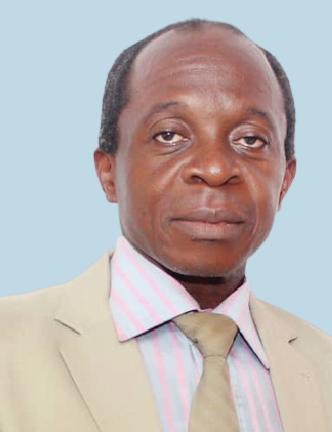
Dr. Olukayode Oyeleye, Business a.m.’s Editorial Advisor, who graduated in veterinary medicine from the University of Ibadan, Nigeria, before establishing himself in science and public policy journalism and communication, also has a postgraduate diploma in public administration, and is a former special adviser to two former Nigerian ministers of agriculture. He specialises in development and policy issues in the areas of food, trade and competition, security, governance, environment and innovation, politics and emerging economies.