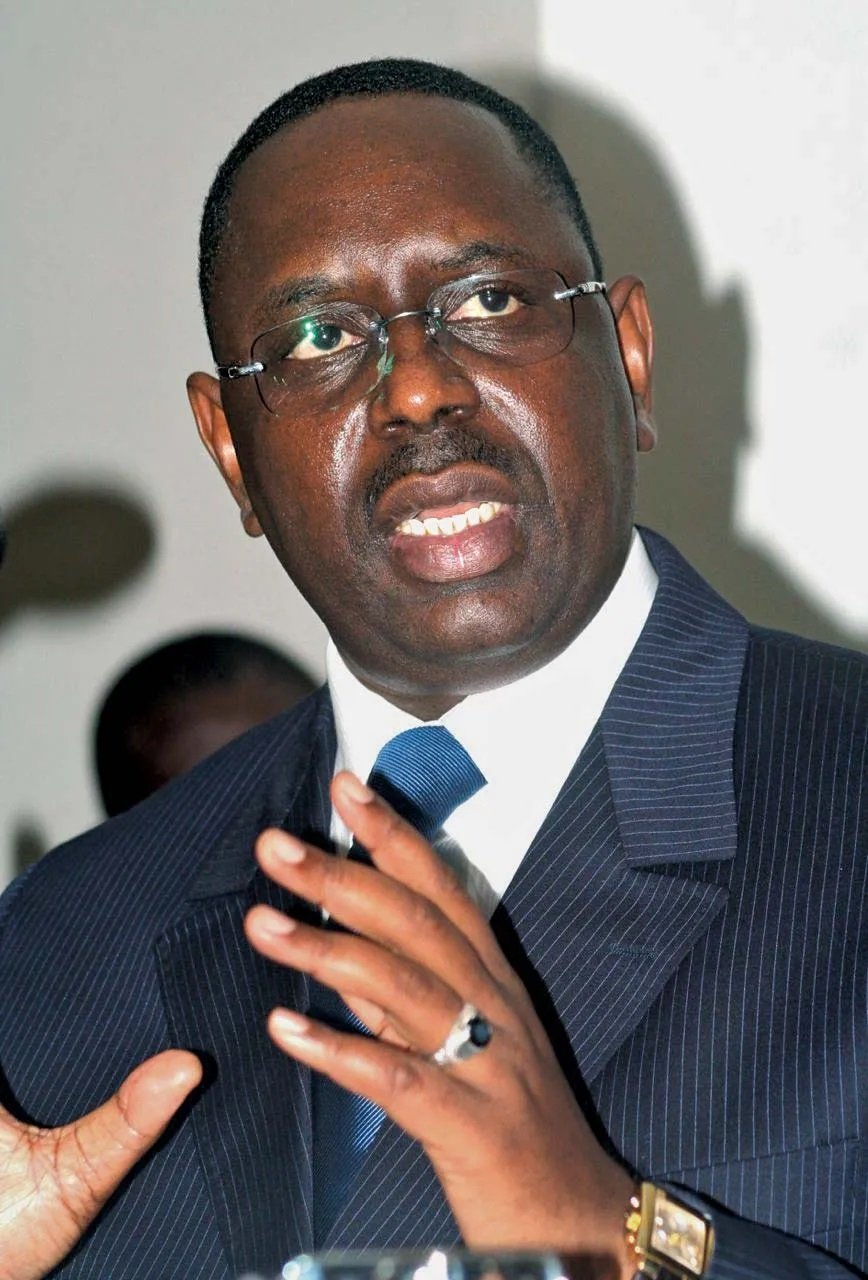
Africa is taking another crack in the race to produce its third secretary-general of the United Nations with Macky Sall, Senegal’s former president, 20 years after Ghana’s Kofi Annan led the global body’s supranational secretariat.
Senegal’s former president Macky Sall is Africa’s only declared candidate in the race to become the next UN Secretary-General, the world’s largest multilateral organisation.
Sall, if selected, would be the first African to lead the UN body since Kofi Annan’s second tenure ended in 2006, breaking a two-decade absence of African leadership of the global secretariat.
However, the continent’s sole candidate faces stiff competition from five other candidates from Latin America and the Caribbean.
Some diplomats of African descent argue strongly that the region is due for the UN’s top representation after two long decades.
The selection process will involve public debates and confidential UN Security Council straw polls, with the final choice approved by the UN General Assembly.
Africa has a single representative in Macky Sall among the six declared candidates seeking to succeed incumbent António Guterres from Portugal, whose second and final five-year term ends on December 31 this year.
While Africa has a sole candidate, Latin America put forward four competitive candidates.
Sall, Senegal’s immediate past president, is therefore, hoping to become the third African to occupy the UN’s highest office.
However, he faces competition from five other candidates: former Chilean president Michelle Bachelet, Argentina’s Rafael Grossi, former Ecuadorian foreign minister María Fernanda Espinosa, Costa Rican economist Rebeca Grynspan, and Guyanese diplomat Carolyn Rodrigues-Birkett.
Last Thursday (July 23), the UN Secretary General’s race entered a crucial phase as the candidates took part in a public debate at the UN headquarters in New York, ahead of the Security Council’s first informal straw poll scheduled for July 30.
If ultimately selected by the influential UN Security Council and approved by the General Assembly, Sall would become the first African Secretary-General since Kofi Annan left office in 2006, ending a two-decade absence of the continent’s leadership at the helm of the global body.
Indeed, Africa might have a long road back to the UN’s top office. Since it’s establishment 81 years ago (in 1945), only two Africans, Egypt’s Boutros Boutros-Ghali and Ghana’s Kofi Annan have served as Secretary-General.
Boutros-Ghali became the sixth UN Secretary-General in 1992, serving only one five-year term before his reappointment bid was heavily blocked by a U.S Security Council veto.
Kofi Annan, enjoying a unanimous recommendation by all the members of the Security Council, was to lead the organization for two successful terms 1997-2006. In 2001, the Ghanaian top diplomat shared the 2001 Nobel Peace Prize with the United Nations.
Together, Boutros-Ghali and Annan, two African top diplomats by every reckoning occupied the UN’s highest office for 15 consecutive years, overseeing some of the organisation’s most defining moments in history, including responses to global humanitarian crises, major peacekeeping operations, and institutional reforms.
South Korea’s Ban Ki-Moon (served January 1, 2007 to December 31, 2016) and Portugal’s António Guterres (2017-2026 by December), have held the office since Annan’s departure, leaving Africa without representation in the UN’s top office for the past 20 years.
By far, there is no formal regional rotation for the Secretary-General post. However, a number of diplomats with international posture, believe Latin America is due to hold the office, which potentially strengthens the four bids by candidates from the region.
The last Latin American Secretary-General of the UN was Javier Pérez de Cuéllar from Peru, who served from January 1, 1982 to December 31, 1991. He remains the only person from Latin America to hold the office.
Nevertheless, diplomatic analysts with African orientation believe Africa’s renewed push comes as the continent’s influence in global geopolitics continues to gain traction.
With it’s 55 member states, Africa represents the largest regional voting bloc in the UN General Assembly. The region has been playing an increasingly central role in debates on reform of the multilateral system, peace and security, climate change and climate justice, and development finance.
Though the next UN Secretary-General could be chosen through confidential Security Council straw polls, recommending a single candidate to the General Assembly for formal appointment, any of the Security Council’s five permanent members—the U.S., China, Russia, the UK, and France—can block a candidate by exercising its veto.