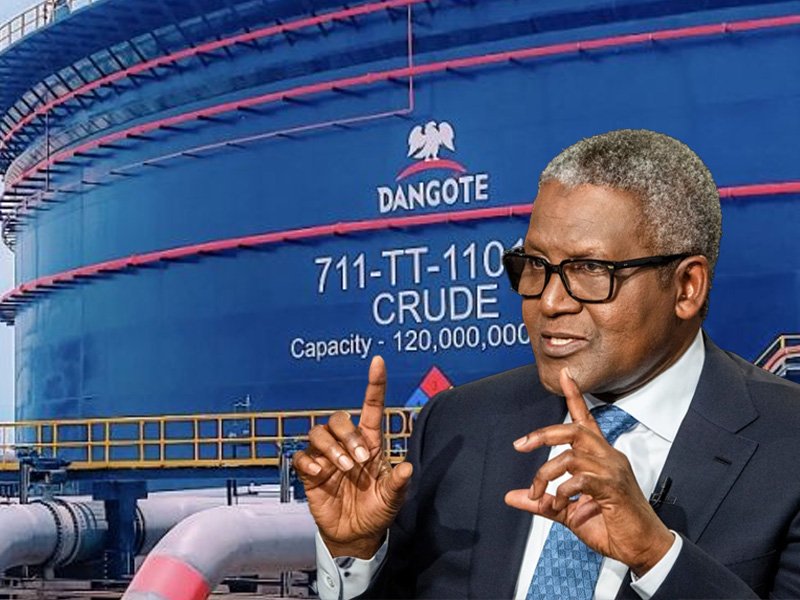
A landmark capital markets transaction is taking shape in Africa’s energy sector as Aliko Dangote prepares to open up a portion of his flagship refinery business to public investors, in a move that could redefine how large-scale industrial assets on the continent are financed.
A key feature of the planned IPO is its currency-risk hedge. Through US dollar-denominated dividends, Dangote Petroleum Refinery and Petrochemicals FZE is enhancing the asset’s appeal to investors seeking protection from local currency depreciation, potentially expanding both domestic and foreign demand.
The offering, expected to involve the sale of about 10 per cent equity, is designed not merely as a liquidity event but as a funding mechanism for an ambitious expansion programme estimated at $40 billion over the next five years. The plan includes scaling refining output, expanding petrochemical operations, and deepening industrial integration across Africa.
Market participants say the dollar-denominated dividend model represents a calculated response to macroeconomic realities across the continent, where foreign exchange instability has often deterred institutional capital from participating in local equity markets.
By anchoring returns in hard currency, Dangote is effectively repositioning the refinery as a quasi-global asset within an emerging market context; one that offers exposure to Africa’s growth story without the full downside of currency risk.
The transaction, which could be launched as early as May subject to regulatory approvals, is being advised by Stanbic IBTC Capital, Vetiva Advisory Services, and FirstCap. It is expected to be listed across multiple African exchanges, potentially marking one of the largest cross-border equity offerings on the continent in recent years.
Beyond its financial engineering, the planned listing reflects a transition in how large African conglomerates are funding growth. Rather than relying solely on debt or private capital, Dangote is tapping public markets to diversify funding sources and deepen capital market participation in industrial-scale projects.
The refinery itself, widely regarded as Africa’s largest with a capacity of 650,000 barrels per day, has already begun to alter regional fuel dynamics. Its ramp-up has reduced dependence on imported refined products and positioned Nigeria as a potential net exporter of petroleum products.
Recent geopolitical disruptions in global oil markets, particularly tensions in the Middle East, have further elevated the strategic value of the asset by tightening global supply and increasing demand for alternative refining hubs.
Analysts note that this backdrop could enhance the attractiveness of the listing, as investors seek exposure to energy infrastructure capable of delivering both stable cash flows and geopolitical relevance.
The move allows Aliko Dangote to raise capital while retaining majority control of the business. By offering a minority stake, the group maintains strategic oversight while opening the project to investor participation.
Market watchers say the success of the offering could boost confidence in Africa’s equity markets and encourage similar large-scale listings. The Dangote Petroleum Refinery and Petrochemicals FZE transaction is also seen as a potential model for bridging capital gaps in economies facing currency volatility and funding constraints.