The POS Irony: Why cash still rules Nigeria’s digital future

Joy Agwunobi 

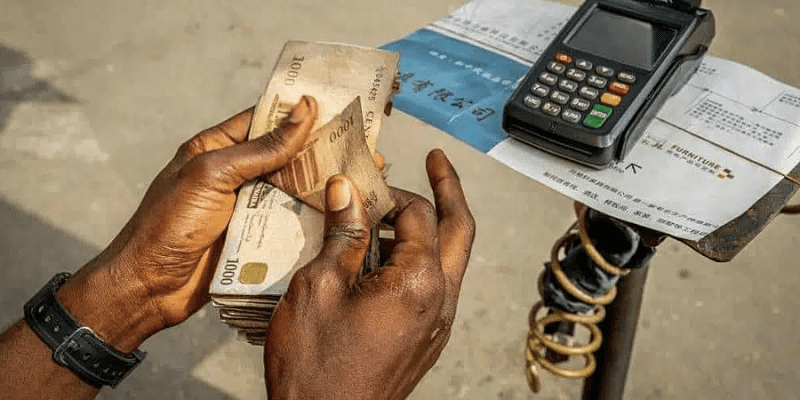
When Nigeria launched its cashless policy over a decade ago, the Point of Sale (POS) machine was expected to become a tool of convenience, a device that allowed consumers to make quick digital payments in shops, restaurants, and service outlets without relying on cash. But more than ten years later, the story has taken an ironic twist. In a country that claims to be building a digital economy, POS machines have become less about payments and more about dispensing physical cash, effectively turning small business operators into mini-ATMs across the streets of Nigerian cities and rural towns.

From bus stops to neighbourhood kiosks, POS agents have become as essential to Nigerians as fuel stations. For many, they are the first stop for cash withdrawals, bill payments, and even money transfers. Yet, this dependence sits uneasily with the nation’s ambition of becoming a truly cashless society. 

This contradiction raises deeper questions: Why is cash still king in Nigeria’s economy, and how did POS evolve from a digital payment enabler into a cash-dispensing lifeline?

The Central Bank of Nigeria (CBN) introduced POS systems around 2012 as part of its cashless policy designed to curb excessive cash handling, reduce banking hall congestion, and promote electronic transactions. In advanced economies, POS terminals are almost exclusively tied to card payments in retail environments, a straightforward “point of sale” device. However, Nigeria’s unique economic context altered the trajectory entirely.Frequent ATM cash shortages, sparse banking infrastructure especially in rural communities, slow network reliability and deep-rooted fears of digital transaction failures pushed Nigerians to seek more dependable ways to access their money. POS agents stepped directly into that gap, transforming financial inclusion through proximity. By placing accessible cash corners in every neighbourhood, they quietly rewrote the country’s payment culture.

Within a few years, the POS business mushroomed into a nationwide phenomenon, according to data from the Nigeria Inter-Bank Settlement System (NIBSS), the total value of POS transactions surged to N18 trillion in 2024, up 69 percent from N10.7 trillion recorded in 2023. The growth, however, was driven not only by digital adoption but also Nigeria’s pressing need for reliable cash access outside of banking premises.

To gauge the realities behind this trend, Business a.m. interacted with everyday users who depend on POS outlets for financial access. Chibundu Mary-Cynthia described POS agents as her default cash source.

“Eight out of ten times when I need cash, it’s for transport, market purchases, small vendors. I send money to POS agents and they give me cash.“The charges can be high, but they are still faster.  There is no bank near me and most of the time ATMs are unavailable, and my mobile app cannot give me cash,” she explained.

She added that Nigeria must reach a stage where even public transport and small vendors can receive digital payments conveniently, because cash remains the only option in many situations.

Agu Chinonso, a virtual assistant, shared a similar perspective. “I don’t even have my bank’s ATM card anymore. If I need cash for transportation or to buy small things from hawkers, I go to a POS agent. It is convenient and everywhere.”

For many Nigerians like these voices, cash remains the economy’s bloodline. The dependence persists even as digital transactions skyrocket.

A cash economy wearing digital clothes

Fintech experts argue that Nigeria’s financial infrastructure has not matured enough to support full digital preference.

According to Kelechi Udochukwu, an experienced fintech analyst, “Nigeria remains heavily dependent on POS agents for cash because POS networks have filled an access and trust gap that the formal cashless system has not resolved. People adopt digital systems only when they trust them. Until digital channels become more reliable, cheaper, and culturally trusted, Nigeria’s “cashless” journey will continue to coexist with a strong POS-driven cash economy.”

Udochukwu identified major structural barriers including unreliable networks, fragmented payment platforms, inconsistent cash policies, fear of failed transactions, cultural cash preference and the rise of POS as micro-fintech hubs offering multiple financial services.

“Over time, POS agents have evolved beyond withdrawals as they now offer deposits, bill payments, airtime, and remittances thereby acting as micro-fintech hubs,” he explained 

Udochukwu warned that Nigeria cannot build a cashless economy on unreliable digital rails, urging national policy to treat digital infrastructure as critical as roads and electricity.

“A cashless economy cannot run on unreliable rails. Government should prioritise digital finance infrastructure in its national development plans, treating it as critical as roads or power. People adopt digital systems only when they trust them,” he added.

Chuma Akanna, a fintech lawyer and technology policy expert, linked the dominance of POS terminals in Nigeria to the size of its informal economy, which makes up about 58 percent of GDP and includes more than 40 million small businesses. He explained that many of these businesses operate largely on cash and depend on POS agents for quick and accessible financial services, especially in communities where bank branches are scarce.

Akanna noted that while POS agents have expanded financial inclusion, their strong presence also exposes gaps in Nigeria’s digital infrastructure. “The POS culture in Nigeria is a mix of weak infrastructure, consumer habits, and regulatory gaps,” he said. Unstable internet connectivity and power supply continue to disrupt payment processes, making POS agents the default bridge in many transactions, even when digital transfers are involved.

According to him, achieving Nigeria’s cashless goals requires coordinated action. He recommended inclusive stakeholder engagement that brings together banks, fintechs, telecoms, civil society, and consumers. He also urged significant investment in broadband and mobile network expansion, particularly in underserved areas. Additionally, he called for flexible regulatory frameworks that support innovation, reduce transaction costs, and protect users.

Akanna stressed that Nigeria can advance its cashless ambitions only by strengthening digital infrastructure and building policies that reflect the realities of the informal sector driving the economy.

Global outlook

Comparisons with more digitally advanced regions show just how much work lies ahead if Nigeria intends to fulfil its ambition of a modern, cash-light economy. Across countries like South Korea, the United Kingdom and Singapore, Point of Sale (POS) terminals remain true to their original purpose: tools for seamless electronic payments, whether through card taps, contactless terminals or quick QR scans, with almost no role in dispensing physical cash at shopfronts.

Global research reinforces this shift. A study titled “Payment trends at the point of sale worldwide: Mobile wallets becoming the dominant payment method” notes that China now processes around 66 percent of POS transactions via mobile wallets alone. India follows closely, fuelled by low-cost QR-based solutions adopted even by informal market traders and rural consumers who previously relied solely on cash. In Kenya, the M-Pesa revolution transformed mobile phones into everyday financial wallets, enabling digital payments to be accepted everywhere from open-air grocery stalls to local bus routes. Whereas Nigeria finds itself situated somewhere in the middle of this transition. The country boasts widespread mobile access, millions of POS terminals in circulation and a populace eager to embrace convenience. However, the coexistence of fragmented digital systems and a deep cultural confidence in cash has kept the financial landscape divided. Consumers pay digitally but withdraw cash from the same POS terminals within minutes, revealing a structural contradiction at the heart of the nation’s cashless dream.

According to Olusoji Adeyemo, Azure Application Innovation and AI specialist at Microsoft UK, Nigeria must shift focus from restricting cash toward making digital alternatives genuinely attractive. Adeyemo stressed that nations like India and Kenya succeeded by ensuring digital payments were affordable, interoperable and widely accepted by small-scale traders. 

“Policies there focused on inclusion, ensuring rural dwellers and small traders could easily access digital tools. Government and private sectors worked together to build trust and infrastructure rather than forcing people away from cash. They also ensured interoperability so that users could pay anyone, regardless of bank or platform. For Nigeria, success will depend on building convenience and confidence into digital payments, not just limiting access to cash,” Adeyemo stated.

He stresses that meaningful cooperation among government, regulators, banks and fintech companies is crucial to strengthening public confidence in Nigeria’s cashless agenda. According to him, government policy must shift from mere rhetoric to proactive measures that make digital transactions a dependable nationwide reality.

Adeyemo outlines key priority areas the government should focus on to ensure a smooth transition. The first, he says, is investment in foundational infrastructure. Stable electricity, strong broadband connectivity and improved rural banking access are essential building blocks that will allow digital payments to function seamlessly across all communities.

The second is ensuring that digital channels are both affordable and secure for everyday users. Adeyemo explains that many Nigerians still rely heavily on cash due to concerns about cost, fraud or unfamiliarity with technology. Introducing user-friendly platforms, digital literacy initiatives and incentives for cash-dependent citizens could help bridge this gap.

Third, he calls for smarter regulation that discourages overreliance on cash while simultaneously supporting the growth of digital alternatives. He notes that properly supervised but widely accessible agent networks remain vital for remote and underserved locations where formal banking services are limited.

His fourth point focuses on implementation. Adeyemo advises that limits on cash usage should be phased in gradually, with regulators consistently monitoring emerging challenges. This approach, he argues, will help prevent unintended financial exclusion, especially in rural areas where access to digital channels is still developing.

Adeyemo concludes that strong communication and collaboration across the ecosystem is equally important. “ policy communication and collaboration with banks, Fintechs and communities must build public trust and awareness that the cashless transition is beneficial and inclusive for all,” he said.

Olusegun Afolabi, co-founder and chief innovations architect at Face Technologies UK Limited, expands on this viewpoint. He believes Nigeria’s existing POS network could become the most powerful onboarding channel for digital finance if agents evolve beyond dispensing cash. To accelerate adoption among low-income users, he suggests zero-fee micropayments, simplified onboarding using digital identity systems like the NIN, and wallet solutions accessible even through basic feature phones.

Afolabi further proposes targeted incentives that encourage behaviour change: discounts on small-value digital transactions, digital literacy programs delivered in local languages through schools and market associations, streamlined compliance rules for small fintech innovators, and seamless bank-fintech partnerships. He also insists that the system must guarantee rapid reversals for failed transfers, noting that reliability is key to confidence.

Across the fintech and policy community, analysts share a common conclusion. Nigeria must rebalance strategy away from bans and restrictions and toward convenience-driven innovation. Strengthening network reliability, reducing transaction failures, enhancing user education, and simplifying digital interfaces all stand as immediate priorities. Without these improvements, consumers will continue to rely on the certainty of physical cash.

Nigeria’s POS economy tells a story of impressive ingenuity. Agents have become the backbone of financial access in communities where traditional bank branches are scarce. But this resilience simultaneously exposes the flaws of the infrastructure meant to replace cash in the first place. For Nigeria to truly transform POS terminals into digital gateways rather than cash distributors, policy, technology and culture must align.

The ambition of a cashless society remains alive. The challenge is ensuring that digital finance becomes so convenient, trusted and rewarding that Nigerians choose it willingly, not because the alternative has been taken away.

Leave a Comment

The POS Irony: Why cash still rules Nigeria’s digital future

Joy Agwunobi 

When Nigeria launched its cashless policy over a decade ago, the Point of Sale (POS) machine was expected to become a tool of convenience, a device that allowed consumers to make quick digital payments in shops, restaurants, and service outlets without relying on cash. But more than ten years later, the story has taken an ironic twist. In a country that claims to be building a digital economy, POS machines have become less about payments and more about dispensing physical cash, effectively turning small business operators into mini-ATMs across the streets of Nigerian cities and rural towns.

From bus stops to neighbourhood kiosks, POS agents have become as essential to Nigerians as fuel stations. For many, they are the first stop for cash withdrawals, bill payments, and even money transfers. Yet, this dependence sits uneasily with the nation’s ambition of becoming a truly cashless society. 

This contradiction raises deeper questions: Why is cash still king in Nigeria’s economy, and how did POS evolve from a digital payment enabler into a cash-dispensing lifeline?

The Central Bank of Nigeria (CBN) introduced POS systems around 2012 as part of its cashless policy designed to curb excessive cash handling, reduce banking hall congestion, and promote electronic transactions. In advanced economies, POS terminals are almost exclusively tied to card payments in retail environments, a straightforward “point of sale” device. However, Nigeria’s unique economic context altered the trajectory entirely.Frequent ATM cash shortages, sparse banking infrastructure especially in rural communities, slow network reliability and deep-rooted fears of digital transaction failures pushed Nigerians to seek more dependable ways to access their money. POS agents stepped directly into that gap, transforming financial inclusion through proximity. By placing accessible cash corners in every neighbourhood, they quietly rewrote the country’s payment culture.

Within a few years, the POS business mushroomed into a nationwide phenomenon, according to data from the Nigeria Inter-Bank Settlement System (NIBSS), the total value of POS transactions surged to N18 trillion in 2024, up 69 percent from N10.7 trillion recorded in 2023. The growth, however, was driven not only by digital adoption but also Nigeria’s pressing need for reliable cash access outside of banking premises.

To gauge the realities behind this trend, Business a.m. interacted with everyday users who depend on POS outlets for financial access. Chibundu Mary-Cynthia described POS agents as her default cash source.

“Eight out of ten times when I need cash, it’s for transport, market purchases, small vendors. I send money to POS agents and they give me cash.“The charges can be high, but they are still faster.  There is no bank near me and most of the time ATMs are unavailable, and my mobile app cannot give me cash,” she explained.

She added that Nigeria must reach a stage where even public transport and small vendors can receive digital payments conveniently, because cash remains the only option in many situations.

Agu Chinonso, a virtual assistant, shared a similar perspective. “I don’t even have my bank’s ATM card anymore. If I need cash for transportation or to buy small things from hawkers, I go to a POS agent. It is convenient and everywhere.”

For many Nigerians like these voices, cash remains the economy’s bloodline. The dependence persists even as digital transactions skyrocket.

A cash economy wearing digital clothes

Fintech experts argue that Nigeria’s financial infrastructure has not matured enough to support full digital preference.

According to Kelechi Udochukwu, an experienced fintech analyst, “Nigeria remains heavily dependent on POS agents for cash because POS networks have filled an access and trust gap that the formal cashless system has not resolved. People adopt digital systems only when they trust them. Until digital channels become more reliable, cheaper, and culturally trusted, Nigeria’s “cashless” journey will continue to coexist with a strong POS-driven cash economy.”

Udochukwu identified major structural barriers including unreliable networks, fragmented payment platforms, inconsistent cash policies, fear of failed transactions, cultural cash preference and the rise of POS as micro-fintech hubs offering multiple financial services.

“Over time, POS agents have evolved beyond withdrawals as they now offer deposits, bill payments, airtime, and remittances thereby acting as micro-fintech hubs,” he explained 

Udochukwu warned that Nigeria cannot build a cashless economy on unreliable digital rails, urging national policy to treat digital infrastructure as critical as roads and electricity.

“A cashless economy cannot run on unreliable rails. Government should prioritise digital finance infrastructure in its national development plans, treating it as critical as roads or power. People adopt digital systems only when they trust them,” he added.

Chuma Akanna, a fintech lawyer and technology policy expert, linked the dominance of POS terminals in Nigeria to the size of its informal economy, which makes up about 58 percent of GDP and includes more than 40 million small businesses. He explained that many of these businesses operate largely on cash and depend on POS agents for quick and accessible financial services, especially in communities where bank branches are scarce.

Akanna noted that while POS agents have expanded financial inclusion, their strong presence also exposes gaps in Nigeria’s digital infrastructure. “The POS culture in Nigeria is a mix of weak infrastructure, consumer habits, and regulatory gaps,” he said. Unstable internet connectivity and power supply continue to disrupt payment processes, making POS agents the default bridge in many transactions, even when digital transfers are involved.

According to him, achieving Nigeria’s cashless goals requires coordinated action. He recommended inclusive stakeholder engagement that brings together banks, fintechs, telecoms, civil society, and consumers. He also urged significant investment in broadband and mobile network expansion, particularly in underserved areas. Additionally, he called for flexible regulatory frameworks that support innovation, reduce transaction costs, and protect users.

Akanna stressed that Nigeria can advance its cashless ambitions only by strengthening digital infrastructure and building policies that reflect the realities of the informal sector driving the economy.

Global outlook

Comparisons with more digitally advanced regions show just how much work lies ahead if Nigeria intends to fulfil its ambition of a modern, cash-light economy. Across countries like South Korea, the United Kingdom and Singapore, Point of Sale (POS) terminals remain true to their original purpose: tools for seamless electronic payments, whether through card taps, contactless terminals or quick QR scans, with almost no role in dispensing physical cash at shopfronts.

Global research reinforces this shift. A study titled “Payment trends at the point of sale worldwide: Mobile wallets becoming the dominant payment method” notes that China now processes around 66 percent of POS transactions via mobile wallets alone. India follows closely, fuelled by low-cost QR-based solutions adopted even by informal market traders and rural consumers who previously relied solely on cash. In Kenya, the M-Pesa revolution transformed mobile phones into everyday financial wallets, enabling digital payments to be accepted everywhere from open-air grocery stalls to local bus routes. Whereas Nigeria finds itself situated somewhere in the middle of this transition. The country boasts widespread mobile access, millions of POS terminals in circulation and a populace eager to embrace convenience. However, the coexistence of fragmented digital systems and a deep cultural confidence in cash has kept the financial landscape divided. Consumers pay digitally but withdraw cash from the same POS terminals within minutes, revealing a structural contradiction at the heart of the nation’s cashless dream.

According to Olusoji Adeyemo, Azure Application Innovation and AI specialist at Microsoft UK, Nigeria must shift focus from restricting cash toward making digital alternatives genuinely attractive. Adeyemo stressed that nations like India and Kenya succeeded by ensuring digital payments were affordable, interoperable and widely accepted by small-scale traders. 

“Policies there focused on inclusion, ensuring rural dwellers and small traders could easily access digital tools. Government and private sectors worked together to build trust and infrastructure rather than forcing people away from cash. They also ensured interoperability so that users could pay anyone, regardless of bank or platform. For Nigeria, success will depend on building convenience and confidence into digital payments, not just limiting access to cash,” Adeyemo stated.

He stresses that meaningful cooperation among government, regulators, banks and fintech companies is crucial to strengthening public confidence in Nigeria’s cashless agenda. According to him, government policy must shift from mere rhetoric to proactive measures that make digital transactions a dependable nationwide reality.

Adeyemo outlines key priority areas the government should focus on to ensure a smooth transition. The first, he says, is investment in foundational infrastructure. Stable electricity, strong broadband connectivity and improved rural banking access are essential building blocks that will allow digital payments to function seamlessly across all communities.

The second is ensuring that digital channels are both affordable and secure for everyday users. Adeyemo explains that many Nigerians still rely heavily on cash due to concerns about cost, fraud or unfamiliarity with technology. Introducing user-friendly platforms, digital literacy initiatives and incentives for cash-dependent citizens could help bridge this gap.

Third, he calls for smarter regulation that discourages overreliance on cash while simultaneously supporting the growth of digital alternatives. He notes that properly supervised but widely accessible agent networks remain vital for remote and underserved locations where formal banking services are limited.

His fourth point focuses on implementation. Adeyemo advises that limits on cash usage should be phased in gradually, with regulators consistently monitoring emerging challenges. This approach, he argues, will help prevent unintended financial exclusion, especially in rural areas where access to digital channels is still developing.

Adeyemo concludes that strong communication and collaboration across the ecosystem is equally important. “ policy communication and collaboration with banks, Fintechs and communities must build public trust and awareness that the cashless transition is beneficial and inclusive for all,” he said.

Olusegun Afolabi, co-founder and chief innovations architect at Face Technologies UK Limited, expands on this viewpoint. He believes Nigeria’s existing POS network could become the most powerful onboarding channel for digital finance if agents evolve beyond dispensing cash. To accelerate adoption among low-income users, he suggests zero-fee micropayments, simplified onboarding using digital identity systems like the NIN, and wallet solutions accessible even through basic feature phones.

Afolabi further proposes targeted incentives that encourage behaviour change: discounts on small-value digital transactions, digital literacy programs delivered in local languages through schools and market associations, streamlined compliance rules for small fintech innovators, and seamless bank-fintech partnerships. He also insists that the system must guarantee rapid reversals for failed transfers, noting that reliability is key to confidence.

Across the fintech and policy community, analysts share a common conclusion. Nigeria must rebalance strategy away from bans and restrictions and toward convenience-driven innovation. Strengthening network reliability, reducing transaction failures, enhancing user education, and simplifying digital interfaces all stand as immediate priorities. Without these improvements, consumers will continue to rely on the certainty of physical cash.

Nigeria’s POS economy tells a story of impressive ingenuity. Agents have become the backbone of financial access in communities where traditional bank branches are scarce. But this resilience simultaneously exposes the flaws of the infrastructure meant to replace cash in the first place. For Nigeria to truly transform POS terminals into digital gateways rather than cash distributors, policy, technology and culture must align.

The ambition of a cashless society remains alive. The challenge is ensuring that digital finance becomes so convenient, trusted and rewarding that Nigerians choose it willingly, not because the alternative has been taken away.

[quads id=1]

Get Copy

Leave a Comment